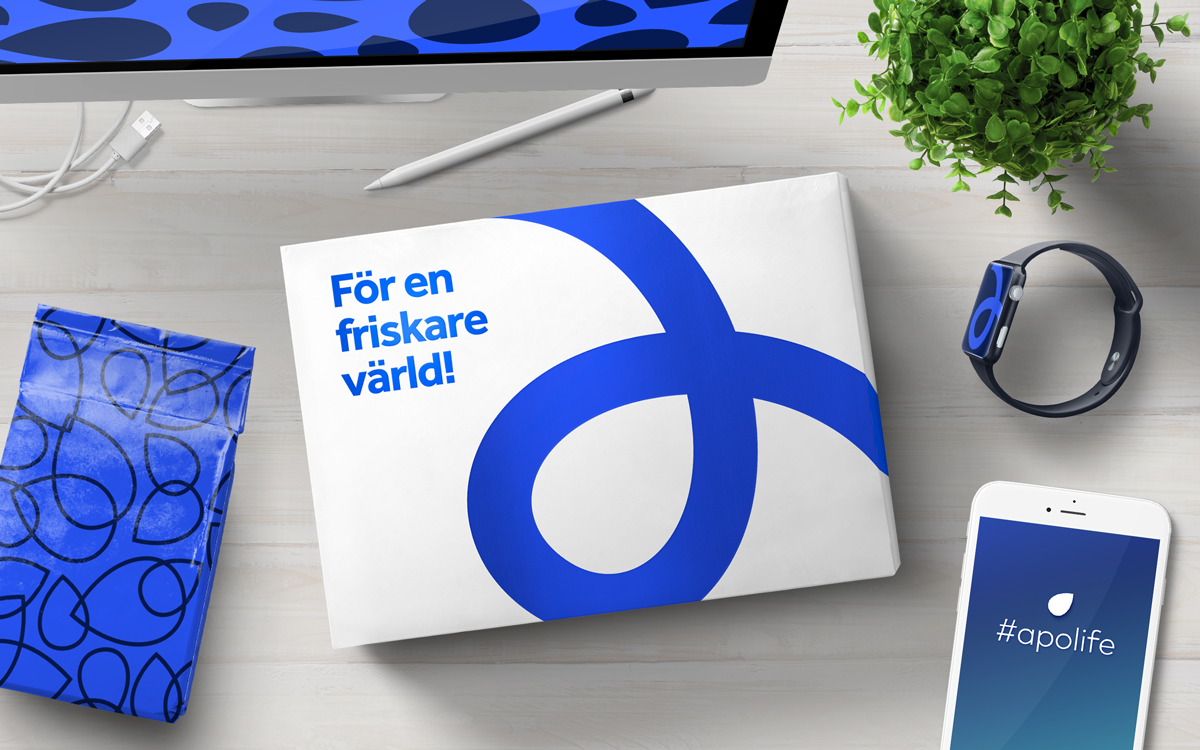
Building a pharmacy from scratch
The problem
In 2017 the Swedish online pharmacy market was effectively one brand. Apotea had built the category almost alone — "snabbt, billigt, fraktfritt" was the only jingle anyone needed. A market that dominant needs a challenger. I joined as employee seven. Established players were partnering with convenience store chains — but one major grocery chain remained without a pharmacy partner. We secured Axfood, the parent of Willys and Hemköp, and were off to the races.
The real problem
A pharmacy is not just a shop. Trust, legibility and repeat behaviour have to be designed in from the start. The goal was everyone — but the demographics that would hold the tent up were mothers buying for the whole family, chronic patients worth building loyalty around, and young adults already shopping D2C everywhere else. Restricted medications demand legally precise information as a condition of being allowed to sell them. Everything else got a prioritisation framework based on data, popularity and search terms. That kind of foundational work sits outside what most people would call design. It was just as important.
What changed because of it
Apohem launched and grew steadily. When the pandemic arrived competitors managing physical store networks faced a complexity Apohem didn't have. Apohem is currently Apotea's strongest challenger in the Swedish online pharmacy market.
What I did
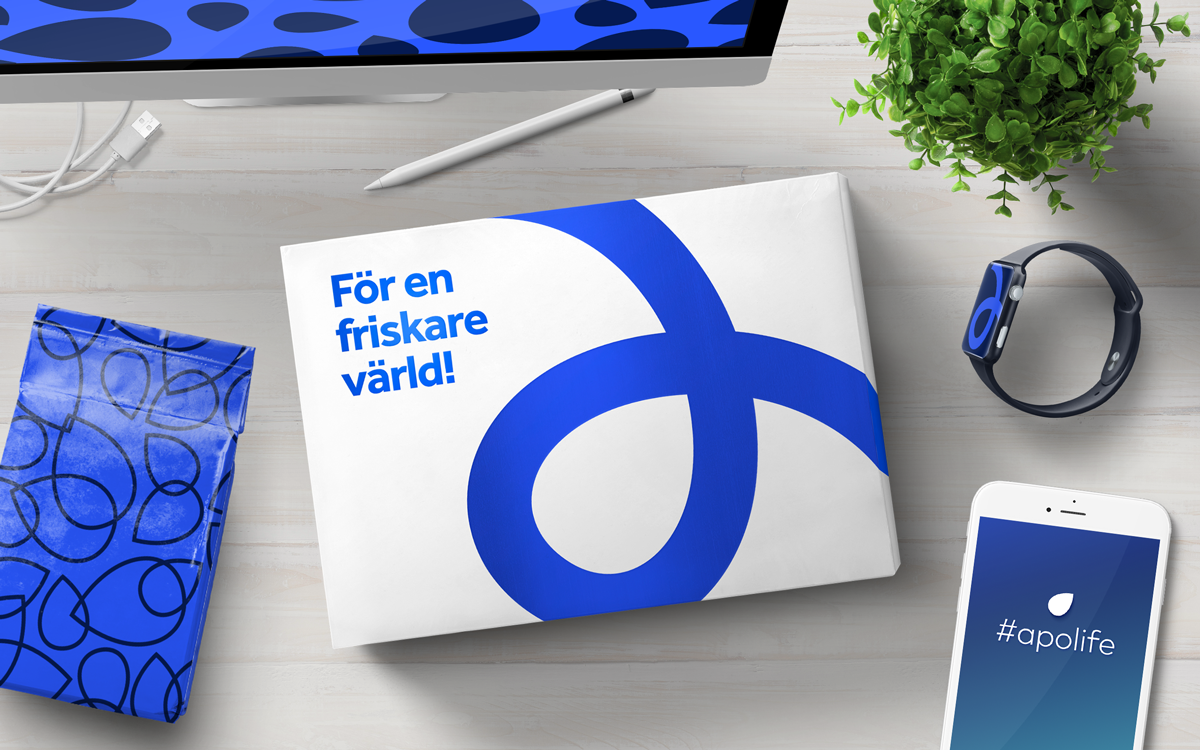
Every design decision was between me and the founding team. Website, visual identity, packaging — custom sizes that could carry the brand, packing sequences for efficiency and unboxing feel. Helped find and fit out the next office when we outgrew the first, down to wall colours and flooring. Worked intimately with Most Studios on brand identity and the naming transition from Hubia to Apohem. Built the demographic hypotheses that shaped positioning and early influencer strategy.
My role
Art Director and UX Designer. I still bleed blue-teal — the design and user voice in a two-person decision-making unit at a startup that didn't exist yet, doing the foundational work that made everything built on top possible.